What to Do When Your AC Breaks on the Hottest Day of the Year
When your AC stops cooling on a 95°F+ Savannah summer day with 80% humidity, immediately turn the thermostat to “off” and the breaker off to prevent damage, then switch any ceiling or box fans to “on” mode for air movement while closing blinds and curtains to block solar heat gain. Call a professional HVAC service right away for diagnosis—most reliable providers in the Greater Savannah area offer same-day or emergency response to restore cooling before indoor temperatures climb dangerously above 85°F.
Bottom line: Act fast to limit heat buildup, avoid DIY refrigerant or electrical work that risks injury or further damage, and expect a technician arrival within 2-6 hours depending on demand, with basic fixes restoring comfort the same day in most cases.
Savannah’s peak summer heat combines high temperatures, oppressive humidity, and frequent afternoon thunderstorms, creating conditions where an AC failure turns a home into an oven quickly. Newer homes in Pooler may have better insulation but still struggle with heat gain through large windows, while older structures in the historic district lose cooled air through gaps and thin walls, accelerating discomfort. On the hottest days—often in July or August when heat indices push past 105°F—systems already stressed from long run times fail under extra load.
Immediate Safety Steps When Cooling Stops
Shut down the system completely by setting the thermostat to “off” and flipping the outdoor unit’s breaker to avoid straining a failing compressor or risking electrical issues. Running a broken AC can overheat motors, burn out capacitors, or cause refrigerant lines to ice further if low on charge.
Open interior doors to allow air circulation between rooms, but keep exterior doors and windows closed to prevent hot, humid outdoor air from entering. In coastal areas like Tybee Island or Garden City, salt-laden breezes carry extra moisture that worsens the indoor feel.
Position portable fans strategically—point them toward people rather than pulling in outside air—to create a wind-chill effect that makes 85-90°F feel more tolerable temporarily. Ceiling fans set to counterclockwise help push cooler air down.
Stay hydrated and monitor for heat-related symptoms, especially with children, elderly family members, or anyone with health conditions. Move to the lowest level of the house where heat rises less intensely.
Quick Checks You Can Do Yourself Before Help Arrives
Verify the thermostat settings first—confirm it’s in “cool” mode, fan set to “auto” (not “on”), and the temperature setpoint is at least 10°F below current room reading. A simple programming error or dead battery accounts for many “failures” on busy service days.
Inspect and replace the air filter if it’s visibly clogged with dust or pollen. Savannah’s spring and summer pollen loads clog filters rapidly, restricting airflow and sometimes triggering safety shutoffs. A new filter costs $10-30 at local stores and installs in minutes.
Look at the outdoor unit from a safe distance. Clear away any visible debris, grass clippings, or leaves blocking the coils or fan—common after recent storms in Richmond Hill or Rincon. Maintain at least 2 feet of clearance around the condenser for proper heat release.
Check your electrical panel for a tripped breaker labeled for the AC. Reset it once if safe, but if it trips again immediately, leave it off and wait for professional help to diagnose surge damage or short circuits.
Listen for unusual sounds when the system attempts to start—grinding, buzzing, or clicking that stops and starts. These clues help the arriving technician pinpoint issues faster.
What to Expect When the Technician Arrives
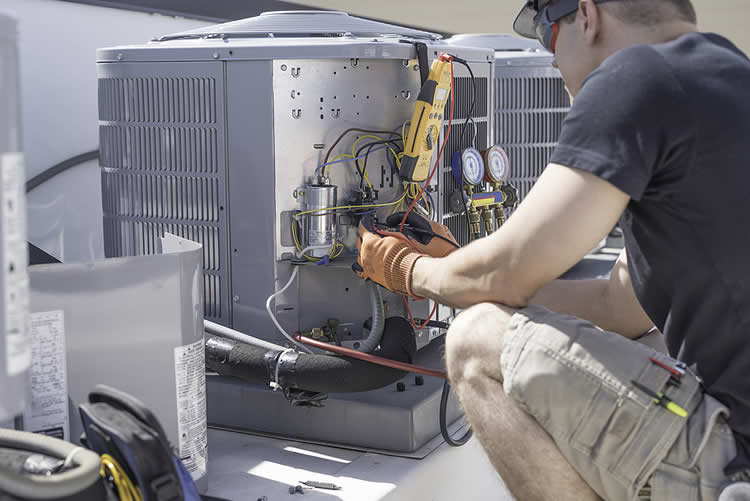
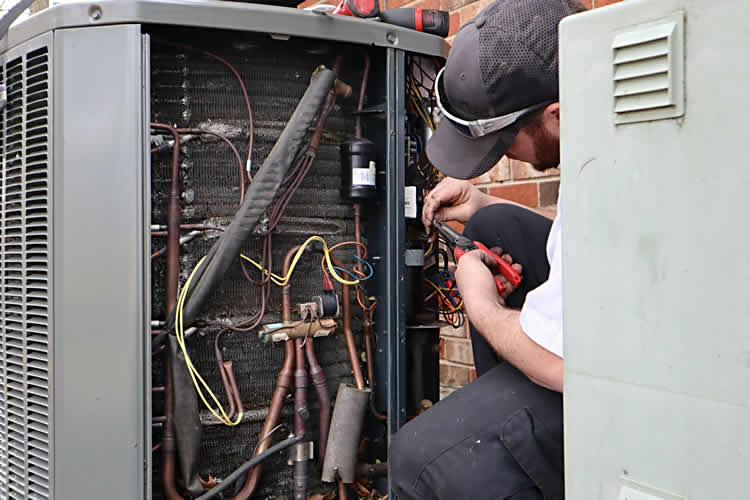
A licensed technician will perform a full diagnostic, typically taking 30-60 minutes, measuring refrigerant pressures, electrical draws, temperatures across coils, and airflow at vents. In high-demand periods, they prioritize stabilizing the system first—perhaps jump-starting a weak capacitor or clearing a drain—to get some cooling flowing while addressing the root cause.
Common same-day fixes include capacitor replacement (often $150-300 parts and labor), drain unclogging ($200-400), or minor refrigerant top-offs if a small leak is found ($300-600). More complex problems like compressor issues or major leaks may require parts ordering and a follow-up visit the next day.
Expect transparent pricing upfront after diagnosis—reputable companies avoid surprise charges. In the Greater Savannah market, emergency or same-day premiums add $100-350 to the standard service fee, with total costs for urgent fixes ranging $400-1,200 depending on the failure.
Temporary Cooling Strategies While Waiting for Repair
Use window fans in bathrooms or kitchens with exhaust fans running to pull hot air out, creating negative pressure that draws slightly cooler air in from shaded sides. Limit oven, dryer, and stove use to avoid adding indoor heat.
Close off unused rooms and focus cooling efforts on living spaces with fans and minimal appliances. Wet towels or bandanas around the neck provide evaporative cooling in humid conditions—effective even when relative humidity limits full sweat evaporation.
If power allows, run a dehumidifier in the most occupied room; lowering humidity from 80% to 60% makes 85°F feel significantly more comfortable. Many Pooler homeowners keep portable units for exactly these scenarios.
Avoid opening the freezer or refrigerator frequently—each time releases cold air and forces the appliance to work harder, adding heat to the kitchen.
Why These Failures Happen More on the Hottest Days
Extreme heat pushes systems to maximum capacity for hours, exposing weak points like aging capacitors stressed by high ambient temperatures or dirty coils unable to shed heat efficiently. Thunderstorms common in the afternoon bring power surges that fry electronics just when demand peaks.
High humidity forces the AC to remove moisture alongside temperature reduction, doubling the workload compared to drier climates. Coastal salt air near Port Wentworth or Tybee accelerates corrosion on outdoor components, while pollen and construction dust in Bloomingdale clog filters and coils faster during peak season.
Regular maintenance catches these vulnerabilities before catastrophic failure—annual tune-ups include stress testing under load conditions similar to the hottest days.
Making the Repair Call Count
When contacting service, describe symptoms clearly: no cool air despite running, unusual noises, recent power events, or indoor temperature trends. Mention your unit’s age, last service date, and any troubleshooting steps taken—this helps dispatch the right technician and parts.
Choose providers familiar with local conditions—those experienced in historic Savannah duct challenges or newer Pooler high-efficiency systems respond more effectively.
Carriage Heating & Cooling maintains quick-response capabilities with Housecall Pro scheduling, transparent pricing, and licensed technicians equipped for Savannah-area demands, ensuring reliable help when heat waves hit hardest.