Mold in Your HVAC System: How It Gets There and How to Get Rid of It
Mold grows inside HVAC systems because the interior of your air handler provides exactly what mold needs to thrive: persistent moisture on the evaporator coil and drain pan, temperatures between 60°F and 80°F year-round, darkness, and a continuous supply of airborne organic material for food.
In Savannah’s climate, where the evaporator coil stays wet nearly continuously from April through October and the air handler interior never fully dries out between cooling cycles, mold colonization inside the HVAC system is not a possibility — it is an inevitability in any system that does not receive annual professional cleaning or UV germicidal treatment. Removing it costs $200 to $800 depending on severity and location, and preventing it from returning requires understanding why your specific system is so hospitable to it.
Mold in the HVAC system is different from mold on a bathroom ceiling or behind a kitchen sink. Those surface colonies affect the room they are in. Mold inside the air handler affects every room in the house simultaneously, because the blower fan distributes spores and biological fragments through the duct system into every conditioned space every time it runs.
A mold colony on the evaporator coil of a home in Pooler is not a localized problem. It is a whole-house air quality problem with a single point source — and that single point source makes it both easier to identify and more straightforward to address than mold growing in building materials.
Why HVAC Systems Grow Mold: The Perfect Storm
Mold needs four conditions to grow: moisture, a food source, appropriate temperature, and time. Your air handler provides all four in abundance, and Savannah’s climate ensures the moisture component is essentially unlimited.
The evaporator coil is the epicenter. During cooling operation, the coil surface temperature drops to 38°F to 45°F — cold enough to condense moisture from the warm, humid indoor air being pulled across it. In Savannah, where indoor relative humidity often exceeds 55% even in air-conditioned homes, that condensation is constant and heavy.
The coil surface is wet from the moment the system starts a cooling cycle until well after it stops, because the residual moisture takes time to evaporate in the humid air handler environment — and in many cases, the next cooling cycle begins before the coil fully dries, meaning it never dries at all during the cooling season.
That perpetually wet surface collects airborne particles from the return air stream — dust, skin cells, pet dander, pollen, and the organic compounds that off-gas from building materials and household products. These particles stick to the wet coil fins and accumulate into a thin layer of organic sludge that provides nutrients for mold colonization. Within weeks of a professional cleaning, this accumulation begins again. Within months, it is substantial enough to support visible mold growth.
The drain pan beneath the coil adds a second moisture reservoir. In a properly functioning system, condensate flows promptly from the pan through the drain line and exits the home. But even a well-maintained drain allows a thin film of water to remain in the pan between drain cycles, and in Savannah’s humidity, the pan never fully dries during the cooling season.
A partially restricted drain — which develops naturally as algae and biofilm accumulate inside the drain line — slows evacuation further, leaving standing water in the pan for hours between cycles. That standing water is warm, organic-rich, and dark — textbook conditions for explosive microbial growth.
The blower wheel sits downstream of the evaporator coil in most air handler configurations, which means it operates in the wet, biologically active zone immediately behind the coil. Moisture from the coil migrates to the blower wheel through humidity in the air handler cavity, and organic material that passes through the coil deposits on the wheel’s fan blades. The wheel itself is often made of materials that mold can colonize directly — painted steel, galvanized metal, or in some brands, composite materials with surface textures that trap moisture.
The ductwork extends the mold’s reach. In Savannah-area homes where ductwork runs through unconditioned attics, the temperature differential between the cool air inside the ducts and the superheated attic air (140°F or higher in summer) causes condensation on the exterior surfaces of poorly insulated duct sections.
Over time, this exterior condensation can migrate through compromised vapor barriers and contact the duct interior, creating isolated moisture zones where mold establishes within the duct system itself. Flex ductwork — standard in most post-1990 Savannah construction — is particularly vulnerable because the fiberglass insulation layer between the inner liner and outer jacket wicks moisture and holds it against the duct surface.
How to Tell If Your System Has Mold
Some indicators are obvious. Others require knowing what to look for.
The musty startup smell is the most common first sign. When the system kicks on after being idle — in the morning, after you return from work, or at the beginning of cooling season — you notice a brief wave of stale, mildew-like air from the supply registers.
This smell comes from mold and biofilm on the blower wheel being flung into the air stream during the initial seconds of fan operation, and from stagnant air in the duct system being pushed out and replaced by freshly conditioned air. The smell typically fades within 30 to 60 seconds as steady-state airflow dilutes the initial burst, which is why homeowners often dismiss it as normal rather than recognizing it as a contamination indicator.
Visible mold around supply registers is a more advanced sign. Dark discoloration on the ceiling or wall surface surrounding a register — particularly ceiling-mounted registers where cold supply air meets warm attic-influenced surfaces — indicates moisture condensation at the register that has supported mold growth.
The mold may be visible on the register face itself, on the boot connecting the register to the duct, or on the surrounding drywall. This is not mold that traveled through the duct system from the air handler — it is mold growing locally due to condensation at the register. But its presence indicates humidity conditions in the duct system that almost certainly correlate with contamination inside the air handler as well.
Worsening allergy symptoms indoors is a functional indicator. Nasal congestion, sneezing, itchy eyes, and postnasal drip that improve when you leave the house and worsen when you return — particularly when symptoms track with the HVAC system running rather than with outdoor pollen counts — suggest the system is distributing biological allergens. Mold spores from a contaminated evaporator coil are among the most potent indoor allergen sources identified in residential studies.
Direct visual inspection is definitive but requires accessing the air handler interior. Lifting or removing the front panel of the air handler and shining a flashlight onto the evaporator coil surface reveals the coil condition. A clean coil has bright, metallic fins with visible gaps between them.
A contaminated coil shows dark discoloration — brown, black, or green — on the fin surfaces, webbing or film between fins that partially blocks the gaps, and in severe cases, visible fuzzy mold growth. The drain pan beneath the coil may show standing water, slime, or visible biological growth.
Inspecting the blower wheel requires more disassembly and is typically a professional task. The wheel is located behind the evaporator coil in most configurations, enclosed in the blower housing. A technician can remove the access panel and visually inspect the wheel blades for contamination. In Savannah homes where the system has not been professionally maintained in two or more years, the blower wheel is almost always contaminated.
Where Mold Grows Inside the System: A Location Map
Understanding where mold establishes inside the system helps you communicate with your technician and evaluate whether a cleaning service is addressing the actual contamination rather than cleaning only the easily accessible areas.
The evaporator coil is the primary colonization site. Mold grows on the upstream face (the side facing the return air), between the fins, and on the downstream face. Chemical cleaning with a commercial coil cleaner breaks down the biological material and allows it to drain through the coil into the pan below. A thorough coil cleaning treats both faces and the fin gaps — not just the visible upstream surface.
The drain pan is the second major site. Cleaning the pan involves removing standing water and organic debris, scrubbing the pan surface, and treating it with a biocide that inhibits regrowth. Some technicians install biocide tablets in the drain pan that dissolve slowly over months, providing continuous antimicrobial treatment. These tablets cost $5 to $15 and are worth requesting if your technician does not include them by default.
The blower wheel is the third site and the one most commonly missed during basic cleaning services. A “coil cleaning” that does not include the blower wheel leaves a major contamination source untouched. When requesting professional cleaning, specify that you want the blower wheel cleaned as well — not just the coil. This adds time and cost to the service but addresses the component that is directly responsible for the musty startup smell.
The drain line is the fourth site. Algae and biofilm inside the drain line are not visible during an air handler inspection, but they contribute to slow drainage that exacerbates pan contamination. Flushing the drain line with a vinegar or bleach solution or blowing it clear with compressed nitrogen should be part of every mold-related cleaning service.
The supply plenum — the sheet metal box that connects the air handler output to the duct system — sometimes develops mold on its interior surfaces, particularly in older installations where the plenum is not insulated and condensation forms on the cold metal during humid conditions. A flashlight inspection of the plenum interior during the cleaning visit identifies this contamination if present.
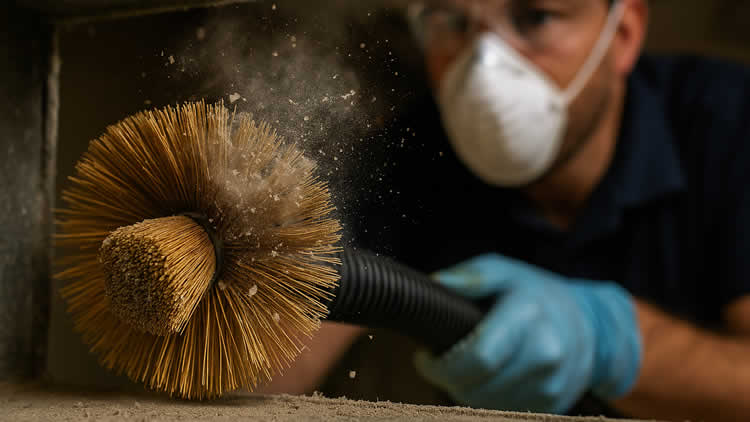
Ductwork contamination is the most difficult to address and the most debated. Mold growing inside duct runs — rather than just near registers — is less common than air handler contamination but does occur, particularly in flex duct that has absorbed moisture through compromised vapor barriers. Professional duct cleaning costs $300 to $600 and removes surface contamination from the duct interior.
For flex duct with moisture damage inside the insulation layer, cleaning the inner liner does not address the contamination within the insulation itself. In severe cases, the affected duct sections must be replaced rather than cleaned — a decision that depends on the extent and location of the damage.
Professional Mold Remediation vs. Standard Cleaning
There is an important distinction between HVAC cleaning and mold remediation, and the distinction affects both cost and approach.
Standard HVAC cleaning is performed by an HVAC technician during a maintenance visit or as a standalone service. It involves chemical cleaning of the evaporator coil, blower wheel cleaning, drain pan treatment, and drain line clearing. Cost: $200 to $500. This service is appropriate for routine biological contamination — the normal mold and biofilm accumulation that occurs in Savannah HVAC systems between annual maintenance visits. It is preventive and maintenance-level in nature.
Mold remediation is a more extensive process performed when contamination has spread beyond the air handler into ductwork, into building materials adjacent to the air handler, or when the mold species present are identified as particularly hazardous (Stachybotrys, also known as black mold, or certain Aspergillus species).
Remediation may involve duct cleaning or replacement, removal and replacement of contaminated insulation, application of professional-grade antimicrobial treatments, containment procedures to prevent cross-contamination during the cleaning process, and post-remediation testing to verify that contamination has been reduced to acceptable levels. Cost: $1,500 to $5,000 or more depending on scope.
The vast majority of mold found in Savannah HVAC systems is the common environmental mold that grows on any wet surface in a humid climate — Cladosporium, Penicillium, and Aspergillus species that are present in outdoor air and in virtually every building. These species cause allergy symptoms and respiratory irritation in sensitive individuals, but they do not require the containment and remediation protocols associated with toxic mold species. A standard professional cleaning addresses this level of contamination effectively.
If you see dark black mold with a slimy or gelatinous texture growing in or around the air handler — particularly if there has been a history of water intrusion from a roof leak, plumbing failure, or drain overflow — consider having the mold identified before proceeding with cleaning.
Identification can be done through a swab test or air quality sample sent to an environmental lab, costing $50 to $200. The result tells you whether standard cleaning is sufficient or whether more aggressive remediation is warranted.
Cleaning It Yourself vs. Hiring a Professional
Some HVAC mold cleaning tasks are within homeowner capability. Others require professional tools, chemicals, and access.
The drain line is the easiest component to maintain yourself. Pouring a cup of distilled white vinegar or a dilute bleach solution (one tablespoon per cup of water) into the drain pan access point every three months kills algae and biofilm before they accumulate enough to restrict flow. This takes two minutes and costs nothing beyond the vinegar or bleach you already have under the sink.
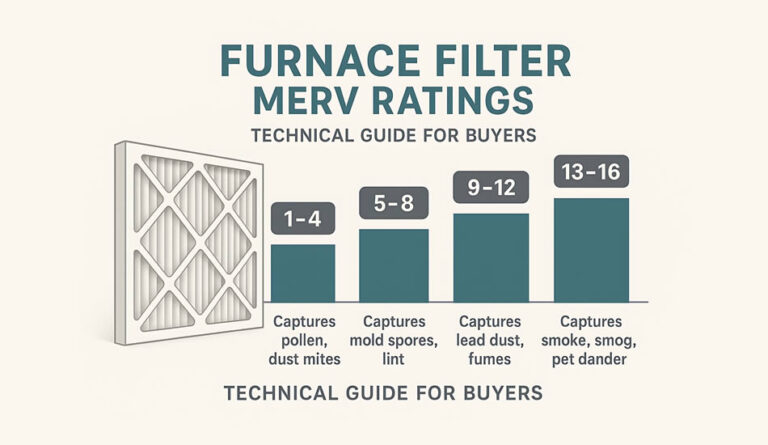
The air filter is a homeowner task by design. Maintaining a clean MERV-10 or MERV-11 filter on a 30 to 45-day replacement schedule reduces the organic material reaching the coil surface, slowing the rate of biological contamination. It does not prevent mold growth — the moisture alone is sufficient — but it reduces the food supply.
The evaporator coil and blower wheel are professional tasks. Effective coil cleaning requires commercial-grade coil cleaner (not household cleaners, which can damage the aluminum fins), careful application technique to avoid bending fins or pushing debris deeper into the coil, and adequate rinsing that directs contaminated runoff into the drain pan and out through the drain line.
Blower wheel cleaning requires partial disassembly of the air handler, and improper technique can damage the wheel balance or the motor bearings. Both tasks also involve working with electrical components that should be properly de-energized before service.
The cost of professional cleaning — $200 to $500 once per year — is modest relative to the consequences of either not cleaning (continuous mold exposure for the household) or cleaning incorrectly (damaged equipment or incomplete contamination removal that gives false confidence). This is a service worth paying for annually in Savannah’s climate.
Preventing Mold From Coming Back
Cleaning removes existing mold. Prevention keeps it from returning. In Savannah’s humidity, prevention requires active measures — the environmental conditions that grow mold are not going away, so you need systems and habits that counteract them continuously.
Annual professional cleaning is the baseline. Even in a well-maintained home, the evaporator coil and blower wheel will develop some biological growth during the six to seven month cooling season. Annual cleaning resets the system to a clean baseline before the next cooling season begins. Schedule it in early spring — March or early April — so the system starts the heavy-use season clean.
UV germicidal lights installed to irradiate the evaporator coil continuously provide the most effective inter-cleaning protection. A properly positioned UV-C lamp kills mold spores on the coil surface before they germinate, keeping the coil biologically clean between annual maintenance visits.
Installed cost is $500 to $1,200, with $80 to $150 per year in lamp replacement. In Savannah’s climate, where coil contamination is the most aggressive in the country, UV coil irradiation is not a luxury — it is the only proven method of maintaining coil cleanliness year-round without monthly professional intervention.
Condensate drain maintenance every three months prevents the standing water conditions that accelerate biological growth in the drain pan. The vinegar or bleach treatment described above takes two minutes and costs pennies. Setting a quarterly reminder on your phone is all the infrastructure this prevention measure requires.
Humidity control below 55% indoors reduces mold growth rates throughout the home and within the HVAC system. A properly sized and maintained AC system achieves this during active cooling operation. During shoulder seasons when the AC runs infrequently, a whole-home dehumidifier maintains humidity control independent of the cooling cycle. For homes with chronic humidity problems despite a functioning AC system — common in older Savannah homes with high air infiltration rates — a dehumidifier is the targeted solution.
Running the thermostat fan on “auto” rather than “on” allows the evaporator coil to drain between cycles. The “on” setting runs the blower continuously, which re-evaporates moisture from the coil surface back into the air stream during the off-cycle — reducing dehumidification and keeping the coil wetter than it would be on “auto.” In Savannah, the “auto” setting is the correct default for both humidity management and mold prevention.
Filter maintenance at the recommended interval prevents accelerated organic buildup on the coil. A clogged filter forces air around its edges, bypassing the filter entirely and depositing unfiltered particles directly on the wet coil surface — adding fuel to the biological growth cycle.
When Mold in the HVAC Means a Bigger Problem
In some cases, mold in the HVAC system is a symptom of a larger moisture issue in the home rather than a standalone problem caused by normal coil condensation.
If mold returns aggressively within weeks of professional cleaning — not the gradual recontamination that occurs over months, but rapid regrowth that produces visible colonies or strong odors within four to six weeks — the system may be dealing with moisture beyond normal condensation.
Possible sources include a refrigerant leak that causes the coil to run abnormally cold and produce excessive condensation, an oversized system that short-cycles and fails to dehumidify adequately, a duct system with significant condensation from inadequate insulation in the attic, or water intrusion into the air handler from a roof leak or plumbing issue above the unit.
A technician evaluating rapid mold return should check refrigerant charge, measure system cycle times, inspect ductwork insulation condition, and look for external moisture sources that are feeding the problem beyond what normal coil condensation produces. Addressing the mold without addressing the underlying moisture source creates a repeating cycle of cleaning and regrowth that costs money without solving anything.
At Carriage Heating & Cooling, our approach to HVAC mold starts with identifying the source — not just cleaning the symptom. We inspect the coil, blower wheel, drain system, and ductwork, evaluate whether the system’s sizing and operation are contributing to excessive moisture, and recommend a cleaning and prevention plan specific to your home’s conditions. If we find mold that warrants professional identification before cleaning, we tell you before we proceed rather than treating blindly.
Call (912) 306-0375 for an HVAC inspection and cleaning anywhere in Pooler, Savannah, Richmond Hill, Tybee Island, or the surrounding area.