Maintenance Checklist Updated for 2026
A standard HVAC maintenance visit includes inspection and cleaning of the condenser and evaporator coils, checking refrigerant levels and pressures, testing electrical components with a multimeter, lubricating moving parts, clearing the condensate drain line, inspecting the air filter, measuring temperature differential across the coil, and verifying thermostat calibration. A thorough tune-up on a residential system takes 45 minutes to 90 minutes and costs between $80 and $200 per visit in the Savannah and Pooler market.
Most homeowners know they are supposed to get their HVAC system maintained. Far fewer know what that maintenance actually involves or how to tell whether a technician performed a real tune-up versus a 20-minute walk-around that checked a few boxes on a clipboard.
The difference matters more than you might expect — a legitimate maintenance visit catches developing problems when they are $150 fixes instead of $1,500 emergencies, and in Savannah’s brutal climate, the margin between a well-maintained system and a neglected one shows up in both equipment lifespan and monthly energy costs.
Here is what should happen during every maintenance visit, why each step matters, and how to tell whether the service you are paying for is actually being performed.
The Outdoor Unit: Condenser Inspection and Cleaning
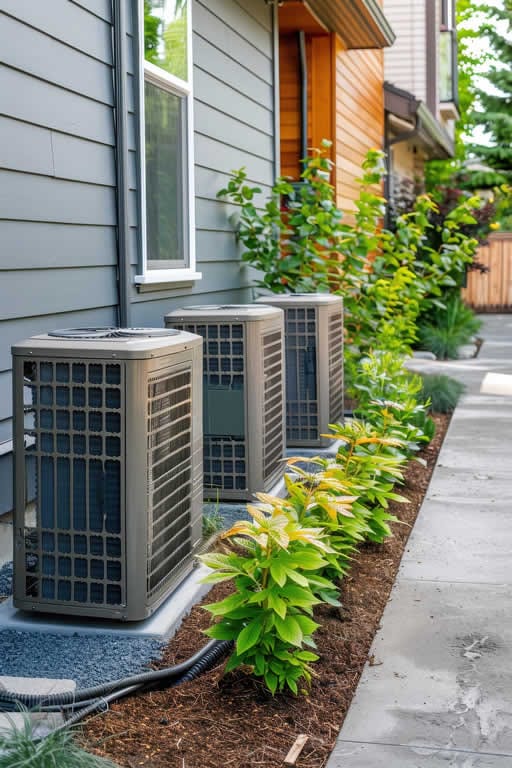
The outdoor condenser unit is where your system dumps the heat it pulled from inside your home. It is also the component most exposed to Savannah’s environmental challenges — pollen, dirt, grass clippings, salt air near the coast, and the general debris that accumulates on any piece of equipment sitting outside year-round.
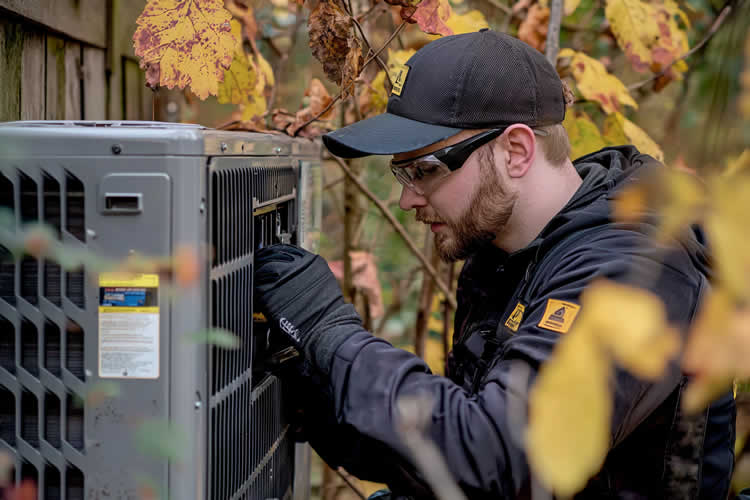
A proper condenser service starts with a visual inspection of the unit and the surrounding area. The technician should verify at least two feet of clearance around the unit on all sides, check that the unit is level on its pad (settling causes vibration and stress on refrigerant lines), and look for obvious damage to the aluminum fins that make up the coil surface.
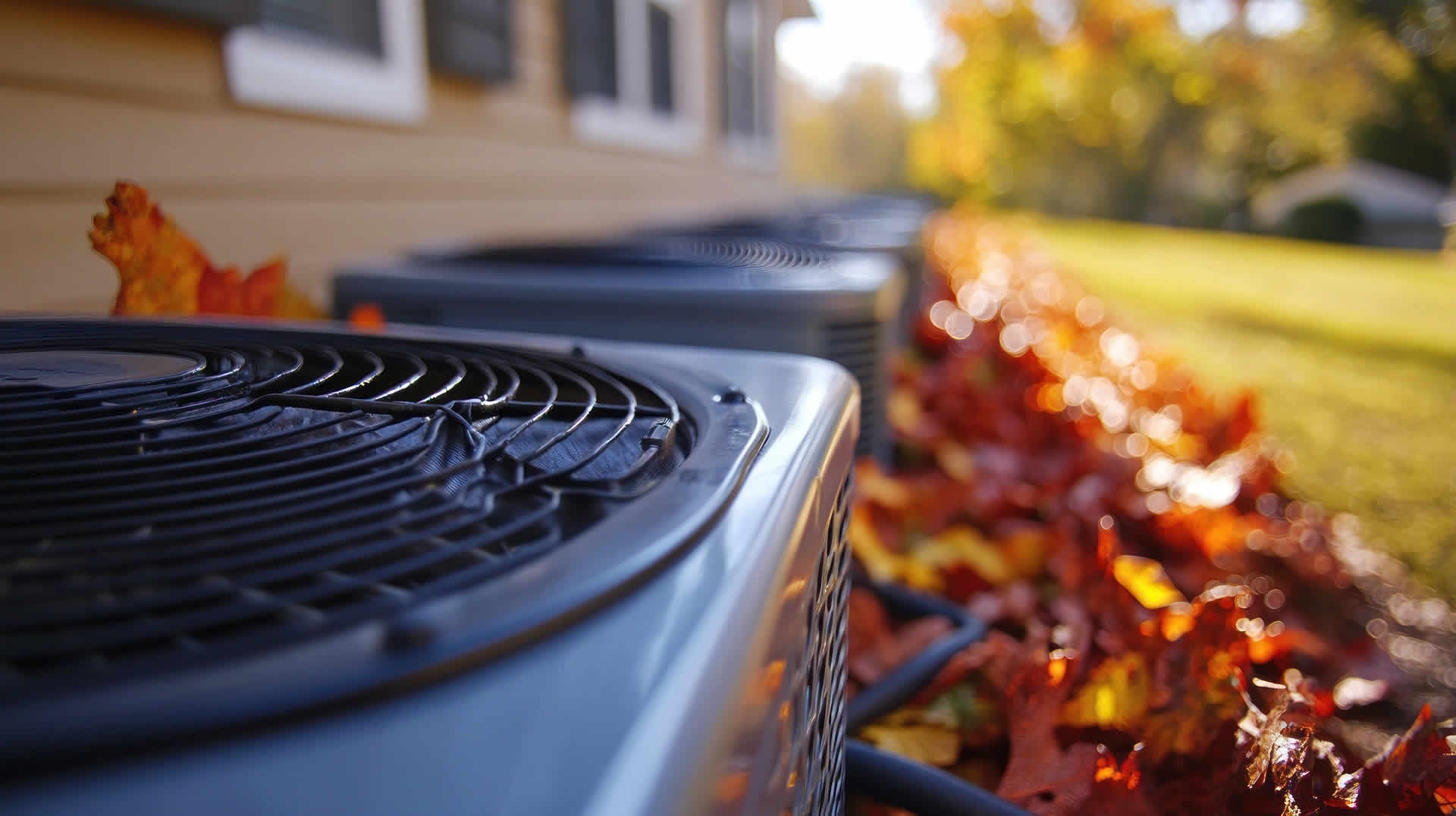
Coil cleaning is the single most impactful step in any maintenance visit. Dirty condenser coils force the compressor to work against higher-than-designed pressures, which increases energy consumption by 10-30% and accelerates compressor wear. In the Savannah area, condenser coils collect a visible layer of pollen during the March-through-May season that can reduce airflow through the coil significantly. Homes within a few miles of the coast accumulate salt deposits that are less visible but equally damaging over time.
Proper coil cleaning involves spraying the coil with a commercial coil cleaner (not just a garden hose), allowing the solution to break down the buildup, and then rinsing thoroughly from the inside out so that debris flushes away from the coil rather than getting pushed deeper into the fins. A technician who sprays the outside of the coil with a hose and calls it clean has not actually cleaned the coil — the debris between the fins remains.
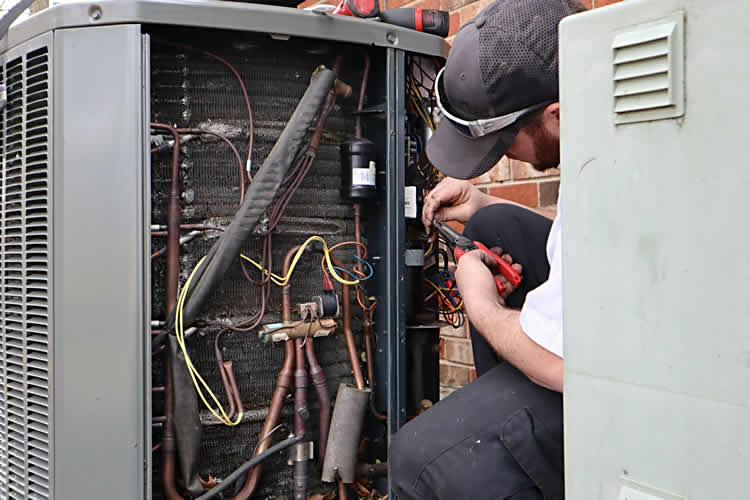
The technician should also inspect the contactor for pitting or burn marks, test the capacitor with a multimeter to verify it is within 10% of its rated microfarad value, measure the compressor amperage draw against the rated load amps on the data plate, and check all electrical connections for tightness and corrosion. Loose connections generate heat, and heat degrades wiring — this is one of the most common causes of electrical failure in outdoor units exposed to Savannah’s humidity and temperature cycles.
The Indoor Unit: Air Handler and Evaporator Coil
The indoor portion of your system gets less attention from homeowners because it is usually tucked in an attic, closet, or garage — out of sight, out of mind. But some of the most expensive failures in residential HVAC originate here, and several of them are preventable with basic maintenance.
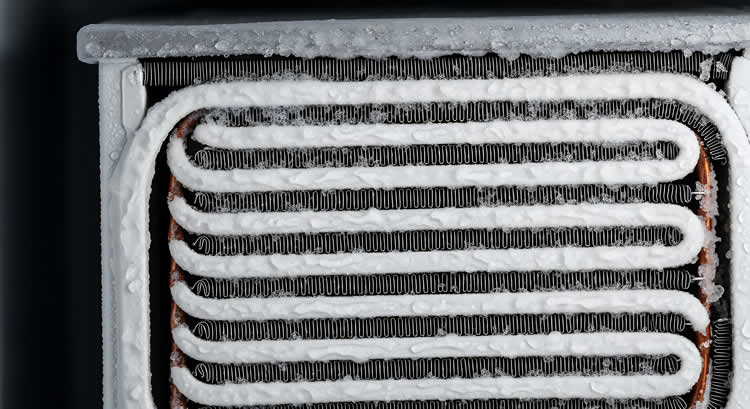
The evaporator coil sits inside the air handler and is where refrigerant absorbs heat from your indoor air. Over time, dust, pet dander, and biological growth accumulate on the coil surface, reducing its ability to transfer heat efficiently. In Savannah’s humid climate, the coil surface stays wet almost continuously during the cooling season because of the constant condensation produced during dehumidification. That persistent moisture creates an ideal environment for mold and bacteria growth on and around the coil — which is both an efficiency problem and an air quality problem.
A maintenance technician should visually inspect the evaporator coil, assess its cleanliness, and recommend a chemical cleaning if buildup is visible. Full evaporator coil cleaning is more involved than condenser cleaning and may be a separate service rather than part of a standard tune-up, but the inspection should happen every visit.
The condensate drain line is arguably the most underappreciated component in the entire system. Every drop of moisture your AC removes from the air flows through this line to a drain or exterior exit point. In Savannah, where a residential AC system can pull 10 to 20 gallons of water per day from the air during peak summer, that drain line handles serious volume. Algae and sludge buildup inside the line is inevitable in this climate, and a clogged drain causes water to back up into the drain pan and eventually overflow — damaging ceilings, walls, and flooring if the unit is in an attic or upper-floor closet.
Clearing the drain line involves flushing it with a vinegar or bleach solution, or using compressed nitrogen to blow out any blockage. Some technicians also install or inspect drain line safety switches that shut the system off before an overflow occurs. If your air handler is in an attic — which is common in Pooler and many Savannah-area homes built after 2000 — a drain line clog without a safety switch can cause thousands of dollars in water damage before anyone notices.
The blower motor and blower wheel should be inspected for cleanliness, unusual noise, and proper operation. The technician should measure the amperage draw on the motor and compare it to the rated value. A blower motor drawing higher-than-rated amps is working too hard, usually because of a dirty blower wheel, restricted ductwork, or a motor bearing that is beginning to fail.
Refrigerant System Check
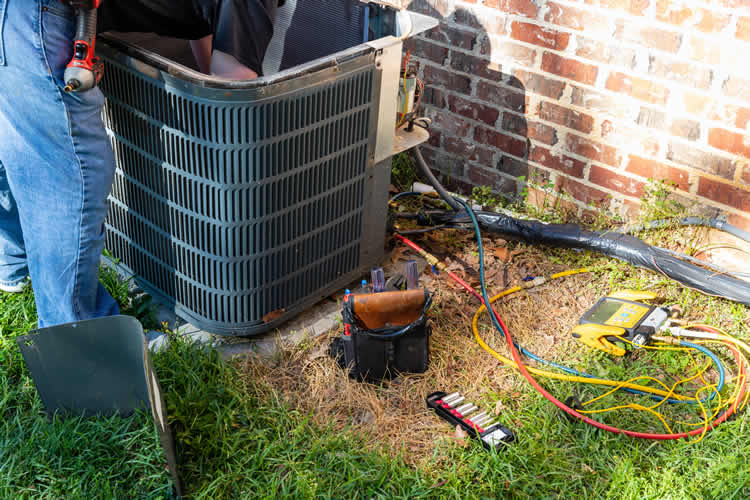
Checking refrigerant is not the same as adding refrigerant, and this distinction matters. A maintenance check involves connecting a manifold gauge set to the system’s service ports and reading the high-side and low-side pressures while the system is running. These pressures are compared against the manufacturer’s specifications for the current outdoor temperature and humidity conditions.
If pressures are within the expected range, no action is needed. If pressures indicate the system is low on refrigerant, that means there is a leak somewhere — refrigerant does not get consumed or wear out. Simply adding refrigerant during a maintenance visit without investigating the cause of the low charge is malpractice disguised as service. A legitimate technician will note the low reading, discuss leak detection options with you, and schedule a separate diagnostic to find and repair the source.
In the Savannah market, technicians should also inspect the refrigerant line insulation on the suction line (the larger of the two copper lines running between units). This insulation degrades in attic environments where temperatures regularly exceed 130°F in summer, and degraded insulation reduces system efficiency and can cause condensation dripping issues in conditioned spaces.
Electrical System Testing
Electrical testing is the portion of maintenance most likely to be skipped by technicians in a hurry, and it is the portion most likely to catch a developing failure before it becomes an emergency.
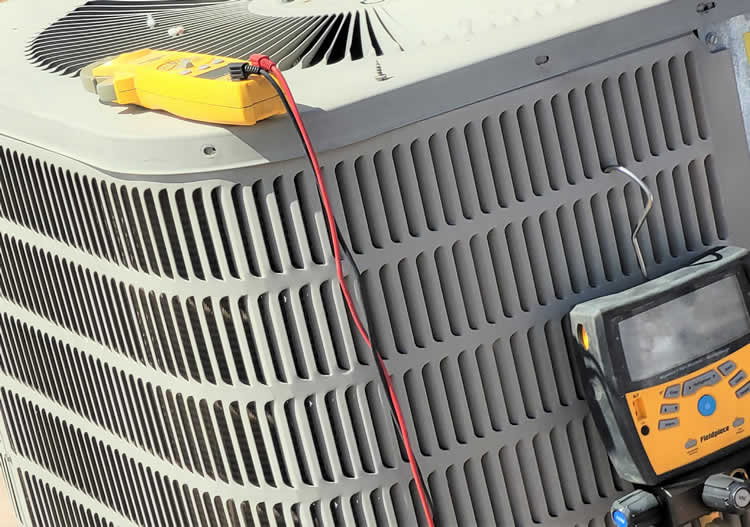
A complete electrical check includes verifying voltage at the disconnect and at the unit itself, measuring amperage draw on all motors (compressor, condenser fan, blower), testing capacitor values with a multimeter, inspecting the contactor for pitting and wear, checking all wire connections for tightness and corrosion, and verifying that safety controls (high-pressure switch, low-pressure switch, thermal overload) are functioning.
Each of these measurements takes one to three minutes. The entire electrical check adds maybe 15 minutes to the visit. But a capacitor reading at 15% below its rated value tells you that component will likely fail within the next few months — giving you the option to replace it during a scheduled visit for $150 instead of during an emergency call on a Saturday in August for $300 or more.
Thermostat Verification
The thermostat is the brain of the system, and a miscalibrated thermostat causes comfort problems that homeowners often blame on the HVAC equipment itself.
Calibration verification means comparing the temperature the thermostat displays against an independent thermometer placed nearby. A deviation of more than 2 degrees Fahrenheit indicates the thermostat sensor needs recalibration or replacement. On older mechanical thermostats, this is a simple adjustment. On digital and smart thermostats, it may require a firmware update or unit replacement.
The technician should also verify that the thermostat is cycling the system correctly — calling for cooling when the room temperature rises above the setpoint and shutting off when the setpoint is reached, with appropriate cycle times. Short cycling (running for less than 8-10 minutes before shutting off) or long cycling (running for 30+ minutes without reaching setpoint) both indicate problems that need diagnosis.
The Air Filter: Simple but Critical
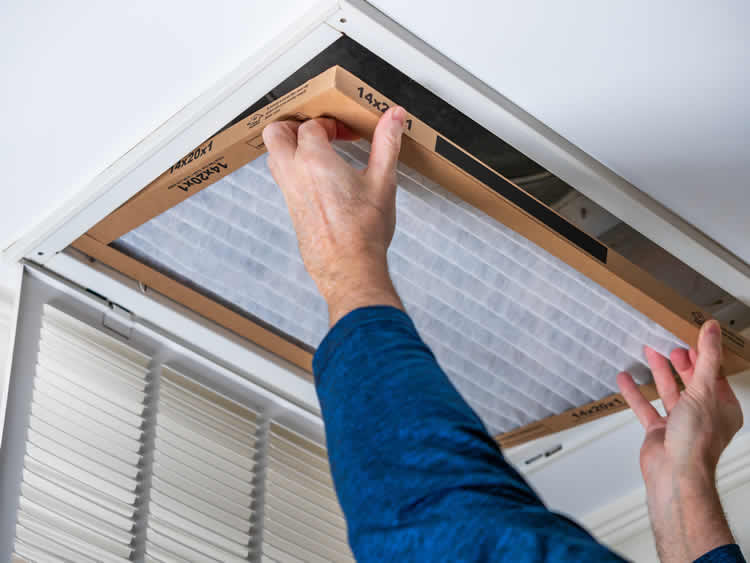
Checking and replacing the air filter is the most basic maintenance step, and it is the one homeowners can and should handle themselves between professional visits. But during a maintenance appointment, the technician should note the current filter condition, the filter type and MERV rating, and whether the filter size and rating are appropriate for the system.
A system designed for a MERV-8 filter that has been upgraded to a MERV-13 by a well-meaning homeowner may actually be restricting airflow enough to cause problems — frozen coils, increased energy consumption, and premature blower motor failure. In Savannah’s high-pollen, high-humidity environment, filter selection is a balance between filtration performance and airflow that depends on your specific equipment, ductwork design, and household conditions. A good technician will make a specific recommendation rather than defaulting to “the higher the MERV, the better.”
How to Tell If Your Tune-Up Was Actually Thorough
You do not need to stand over the technician’s shoulder for 90 minutes. But there are a few observable signals that separate a legitimate maintenance visit from a clipboard exercise.
The visit should last at least 45 minutes for a single system. If the technician is in and out in 20 minutes, they skipped steps. There is no physical way to clean condenser coils, check refrigerant pressures, measure electrical components, clear a drain line, and inspect the air handler in 20 minutes.
You should see tools come out of the truck — specifically a manifold gauge set (colored hoses connected to round gauges), a multimeter, and either a garden hose or a pump sprayer with coil cleaner. If the only tool the technician carries to the unit is a screwdriver, the visit is a visual inspection being billed as a tune-up.
After the visit, you should receive a written report documenting what was checked, what was found, and any recommendations for follow-up work. This report is your proof of maintenance for warranty purposes — most manufacturers require documented professional maintenance to honor extended warranty claims. If the technician leaves without providing documentation, ask for it before they drive away.
Spring vs. Fall: When to Schedule in Savannah
The conventional recommendation is to service the cooling system in spring and the heating system in fall. In Savannah’s climate, the cooling service is far more critical because the AC runs six to seven months per year under heavy load while the heating system sees relatively light duty during the short, mild winters.
Schedule your cooling season maintenance in March or early April — after the heaviest pollen has passed but before the system goes into daily use. This timing gives you the best chance of catching problems before peak cooling demand, and it puts you ahead of the rush. HVAC companies in the Savannah area book up fast once the first 90-degree days hit in May, and getting a maintenance appointment in June or July can mean waiting two to three weeks.
At Carriage Heating & Cooling, our maintenance visits follow every step outlined above, documented with a written report that protects your warranty coverage. We service all major brands across Pooler, Savannah, Richmond Hill, and the surrounding area. Call (912) 306-0375 to schedule your tune-up before the cooling season starts.