HVAC Maintenance Plans: What They Cost and Whether They’re Worth It
HVAC maintenance plans in the Savannah area typically cost $150 to $300 per year and include one or two scheduled tune-ups, priority scheduling, and discounts on repairs — usually 10-20% off parts and labor. For most homeowners running a single central AC system in coastal Georgia, a maintenance plan pays for itself within one to two years through a combination of avoided emergency calls, extended equipment lifespan, and lower energy bills. The math favors the plan more heavily the older your system is and the more Savannah’s climate punishes your equipment.
Maintenance plans are one of the most debated purchases in residential HVAC. Some homeowners view them as an obvious investment in expensive equipment. Others see them as a subscription service designed to lock you into a single company. Both perspectives have some truth, and whether a plan makes sense for you depends on your system’s age, your willingness to schedule maintenance on your own, and how you weigh the value of priority service during Savannah’s peak cooling season when every HVAC company in town is booked solid.
What a Typical Maintenance Plan Includes
Plans vary by company, but the core components in the Savannah market follow a fairly standard structure. Understanding what you are actually buying helps you compare plans on substance rather than marketing language.
The foundation of every plan is one or two scheduled maintenance visits per year. A single-visit plan covers the cooling system in spring. A two-visit plan adds a fall heating system check. In Savannah’s climate, where the cooling system runs six to seven months under heavy load and the heating system sees relatively light use during mild winters, the spring cooling tune-up delivers the majority of the value. The fall visit is worthwhile but less critical — your heating system in Pooler simply does not work hard enough to degrade at the same rate as your AC.
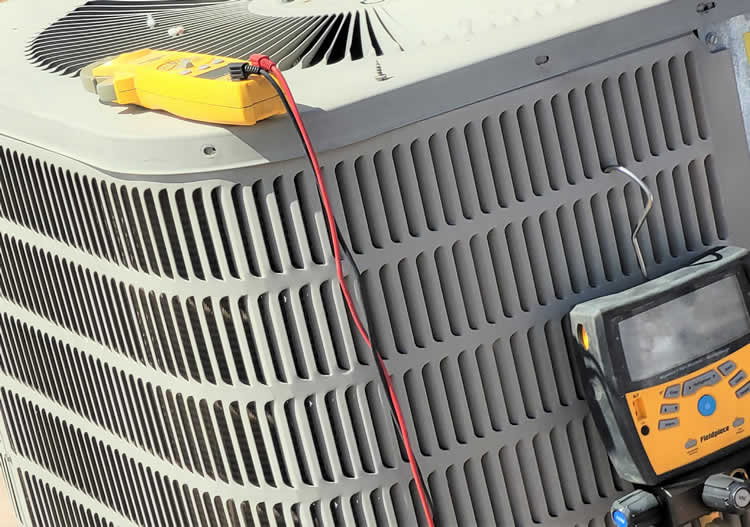
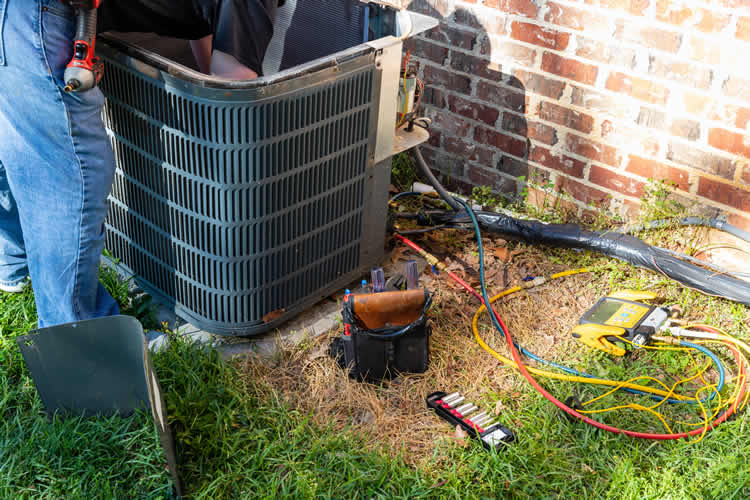
Each visit should include everything outlined in a comprehensive maintenance checklist: condenser and evaporator coil inspection, refrigerant pressure check, electrical component testing, condensate drain clearing, blower motor inspection, filter check, thermostat calibration, and temperature split measurement. If a company’s plan describes the visit as an “inspection” without mentioning coil cleaning or electrical testing, you are paying for a visual walk-around, not a tune-up.
Beyond the visits themselves, most plans include priority scheduling. This means that when your system fails in the middle of a July heat wave and every HVAC company in the Savannah area has a two-week backlog, plan members move to the front of the queue. The practical value of this varies — during mild weather, everyone gets fast service. During the peak weeks of summer, when outdoor temperatures hit the mid-90s and every phone in every HVAC office is ringing nonstop, priority scheduling can mean the difference between a next-day repair and a week-long wait in a house with no air conditioning.

Repair discounts round out most plans. The standard discount in this market is 10-20% off parts and labor for any repair performed while the plan is active. On a $200 capacitor replacement, that discount saves you $20 to $40 — nice but not significant. On a $1,500 evaporator coil replacement, that same percentage saves $150 to $300 — which by itself covers most or all of the plan’s annual cost.
Some plans also include additional perks like waived diagnostic fees, no overtime charges for after-hours service calls, or extended labor warranties on repairs. These extras are worth evaluating but should not be the primary reason you buy or skip a plan. The core value proposition is the maintenance visits plus priority scheduling plus repair discounts, and everything else is supplementary.
The Math: When Plans Pay for Themselves
The simplest way to evaluate a maintenance plan is to compare its cost against what you would pay for the same services purchased individually.
A standalone AC tune-up in the Savannah market costs $80 to $200, depending on the company and the depth of service. If you schedule one cooling season tune-up and one heating season tune-up separately, you are looking at $160 to $400 per year. A maintenance plan covering both visits typically costs $150 to $300 per year — roughly the same as buying the visits individually, sometimes slightly less. At this level, the plan is essentially a prepayment for services you should be getting anyway, with priority scheduling and repair discounts included as a bonus.
The real financial payoff comes when something breaks. A single repair of $500 or more with a 15% plan discount saves $75 or more — which, combined with the value of the included tune-ups, means the plan has already returned more than its cost. Given that the average age of HVAC systems in established Savannah neighborhoods like Pooler, Wilmington Island, and Georgetown suggests that a significant portion of installed equipment is 8 to 15 years old, the probability of needing at least one repair per year in that age range is high.
The Department of Energy estimates that regular professional maintenance improves HVAC efficiency by 5-15% compared to unmaintained systems. On a household that spends $200 per month on electricity during the cooling season — a common figure for a 2,000-square-foot home in Savannah running the AC from April through October — a 10% efficiency improvement translates to roughly $140 in annual energy savings across the seven-month cooling season. That number alone does not justify a maintenance plan, but stacked on top of the repair discount savings and the value of the included visits, the cumulative financial case becomes solid.
Over a five-year period, a homeowner with a maintenance plan typically spends $750 to $1,500 on the plan itself and saves $500 to $2,000 through repair discounts, avoided emergency calls, lower energy bills, and extended equipment lifespan. The net result is break-even to moderately positive in most scenarios and significantly positive for homeowners with older systems that need occasional repairs.
When a Maintenance Plan Does Not Make Sense
Plans are not universally worthwhile. There are specific situations where the money is better spent elsewhere.
If your system is brand new and under a full manufacturer warranty, the financial case for a maintenance plan is weakest. New equipment rarely needs repairs in the first three to five years, which means the repair discount — the highest-value component of most plans — goes unused. You still benefit from the tune-ups, but you could get those by scheduling standalone appointments.
The one argument for a plan on a new system is that most manufacturer warranties require documented professional maintenance to remain valid. If your plan provides that documentation and you would otherwise forget to schedule service, the plan acts as an accountability mechanism that protects a much larger financial interest — your warranty coverage.
If you are disciplined about scheduling your own maintenance annually and you have a trusted HVAC company you call when something breaks, you can replicate most of the plan’s value through standalone services. The premium you pay for a plan is partly a convenience and consistency fee — it removes the burden of remembering to schedule, ensures you are on the books before peak season, and gives you a single company managing your system’s history over time. If you are the type of homeowner who calendars these things and follows through, that convenience has less value to you.
If you are planning to replace your system within the next 12 months, investing in a maintenance plan for equipment that is about to be decommissioned does not deliver enough return. Put that money toward the replacement instead.
What to Watch Out For in Plan Contracts
Not all maintenance plans are structured fairly, and a few contract terms deserve scrutiny before you sign.
Auto-renewal clauses are standard but should come with easy cancellation. If a plan requires written notice 60 or 90 days before renewal to cancel, that is a friction point designed to keep you enrolled through inertia rather than satisfaction. Look for plans that allow cancellation at any time or with 30 days’ notice.
Transfer restrictions matter if you sell your home. A plan that is tied to the homeowner rather than the property cannot be transferred to a buyer, which means any remaining value evaporates at closing. Plans tied to the property address transfer automatically and can be a modest selling point when listing the home.
Scope limitations define what is and is not covered. The plan covers maintenance and provides discounts on repairs — it is not a warranty and it is not insurance. If a company’s marketing implies that the plan “covers” repairs without clarifying that it provides a discount rather than full coverage, read the fine print carefully. Some companies sell extended warranty products bundled with maintenance plans at significantly higher price points ($400 to $800 per year), and these are a fundamentally different product with different cost-benefit math.
Exclusions for pre-existing conditions are common and reasonable. If your system has a known refrigerant leak or a failing compressor at the time you enroll, the plan discount typically does not apply to those existing issues. This prevents homeowners from enrolling specifically to get a discount on an imminent major repair, which would make the plan financially unsustainable for the company.
The Hidden Value: Documentation and Relationship
Beyond the direct financial calculation, maintenance plans provide two forms of value that are harder to quantify but genuinely useful.
The first is documentation. Every plan visit creates a service record that includes the date of service, the technician’s findings, any measurements taken, and recommendations for follow-up. This documentation serves as proof of maintenance for manufacturer warranty claims, provides a longitudinal view of your system’s health over time (making it easier to spot trends like gradually declining refrigerant levels that indicate a developing leak), and creates a paper trail that adds value when selling your home. A buyer who sees three or four years of documented professional maintenance on the HVAC system has more confidence in the equipment — and that confidence can translate into fewer concessions during inspection negotiations.
The second is relationship continuity. When the same company services your system twice a year, their technicians develop familiarity with your specific equipment, your home’s ductwork layout, and any quirks in the installation. That institutional knowledge means faster diagnostics when something goes wrong, because the technician reviewing your service history can see that the capacitor was borderline six months ago rather than starting the diagnosis from scratch. It also means the company has a financial incentive to maintain the relationship through honest service rather than maximizing a single transaction — a plan customer who cancels due to poor service represents years of lost revenue, not just one missed repair.
How Carriage Structures Maintenance Plans
At Carriage Heating & Cooling, our maintenance plans include two visits per year — a comprehensive cooling system tune-up in spring and a heating system check in fall. Plan members receive priority scheduling during peak season, 15% off all repairs, and waived diagnostic fees on service calls. There are no auto-renewal traps and no long-term contracts — you can cancel anytime.
Every visit follows a documented checklist with measurements and findings recorded in your service history through Housecall Pro, so you always have access to your records. We service all major brands across Pooler, Savannah, Richmond Hill, Rincon, and the surrounding communities.
If you want to discuss whether a maintenance plan fits your situation or you want to schedule a standalone tune-up before the cooling season ramps up, call us at (912) 306-0375.