How Long Does an AC Repair Take?
Most AC repairs in the Savannah area take 1 to 4 hours once the technician arrives, with simple fixes like replacing a capacitor or cleaning a clogged drain completed in 30 minutes to 2 hours, while more involved issues like refrigerant leaks or compressor work can extend to 4-8 hours or require a second visit if parts are needed.
Bottom line: Plan for a same-day resolution in most cases during peak summer demand in Greater Savannah, but major repairs involving part orders might push completion to the next day.
Your AC system cycles refrigerant, compresses gas, and expels heat outdoors to maintain indoor comfort. When it breaks, the process from call to cool air restored involves diagnosis, repair, and testing. In Pooler’s humid subtropical climate, where temperatures climb above 95°F with 80% humidity from late spring through fall, breakdowns hit harder and faster, often during afternoon thunderstorms that cause power surges or debris issues.
What Happens When You First Call for AC Repair?
Scheduling starts with a quick phone assessment of symptoms like no cool air, strange noises, or high energy bills. Using Housecall Pro, appointments get booked efficiently, often same-day or next-day in the Greater Savannah area. Response times average 2-4 hours for standard calls, shorter for emergencies in places like Richmond Hill or Rincon during heat waves.
The technician arrives in a marked vehicle, equipped with diagnostic tools and common parts. Initial steps include a safety check, reviewing your system’s history, and discussing what you’ve noticed. This conversation helps narrow possibilities before any work begins.
How Long Does Diagnosis Typically Take?
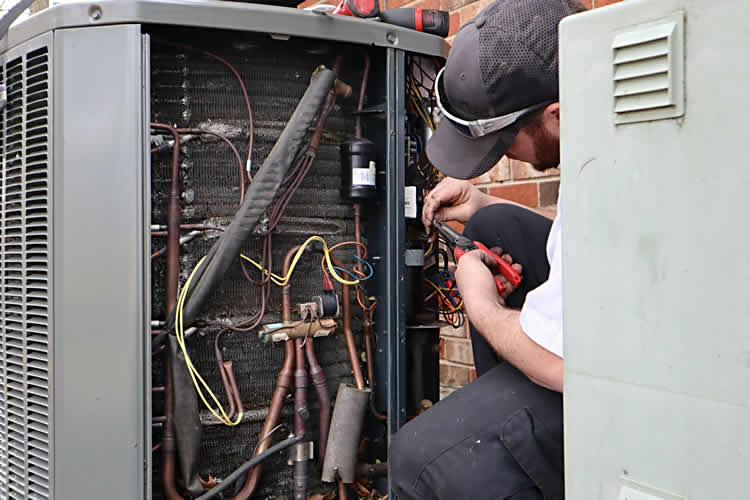
Diagnosis usually takes 30 minutes to 1 hour. The tech measures refrigerant pressure, checks electrical components, inspects coils for dirt buildup, and tests airflow. In Savannah’s salt-air coastal zones near Tybee Island, corrosion shows up quickly on outdoor units, while pollen from spring seasons clogs filters and drains in historic Savannah homes.
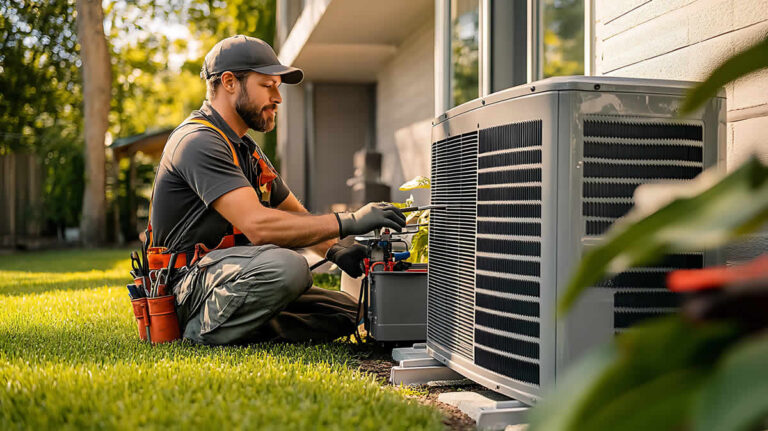
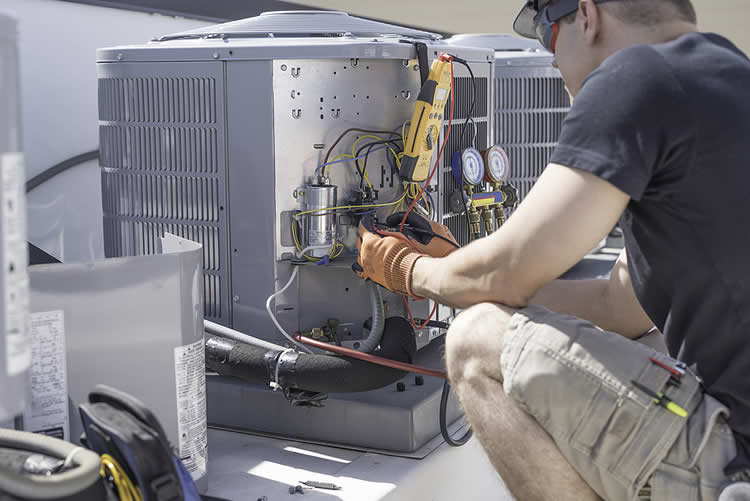
Tools like manifold gauges reveal low refrigerant in minutes, and multimeters detect failed capacitors fast. Accurate diagnosis prevents unnecessary part swaps and keeps total time down.
[IMAGE: HVAC technician using gauges to check refrigerant pressure on an outdoor AC unit | Alt text: Technician diagnosing AC system refrigerant levels in Pooler Georgia]
What Are the Timelines for Common AC Repairs?
Simple electrical fixes, such as replacing a blown capacitor or contactor, take 30 minutes to 1.5 hours. These parts fail often in humid environments, and swapping them restores function quickly after testing startup amps.
Clogged condensate drains, common after Savannah’s heavy rains, clear in 1-2 hours. Technicians use wet vacs or compressed air, then flush lines and add algaecide tablets to prevent recurrence in high-humidity areas like Garden City.
Refrigerant leaks require 2-4 hours for location, repair, evacuation, and recharge. Leak detection with electronic sniffers or dye takes time, but most get fixed same-day unless major line replacement is needed. In older Pooler constructions, small leaks from vibration often resolve without full system work.
Fan motor or blower issues average 2-3 hours, including removal, installation, and balancing. Coastal exposure accelerates bearing wear, but standard motors keep labor straightforward.
Coil cleaning for evaporator or condenser units takes 1-3 hours per coil, depending on access and buildup severity. Heavy debris from construction dust in Bloomingdale extends this slightly, but proper chemical cleaning restores efficiency without full replacement.
When Do Repairs Take Longer or Require Multiple Visits?
Compressor failures push times to 4-8 hours or more, often needing a second day if the replacement unit requires ordering. Compressors last 10-15 years in Georgia’s climate, but salt corrosion near the coast shortens that, and full replacement involves recovering refrigerant, brazing lines, and vacuum testing.
Ductwork repairs for leaks or blockages add 2-6 hours, more in attics of historic Savannah homes where access challenges slow progress. Sealing with mastic or replacing sections improves airflow but extends the job.
If parts aren’t in stock, such as specific capacitors or expansion valves, technicians order them for next-day delivery. In peak summer, supply chains sometimes delay this to 48 hours, though local suppliers minimize waits in the Savannah market.
Power surge damage from frequent thunderstorms can affect multiple components, turning a 2-hour fix into a full-day effort.
How Does the Repair Process Wrap Up?
After the fix, the technician runs the system for 15-30 minutes to verify temperatures drop properly, usually reaching 15-20°F below outdoor ambient. Checks include amp draws, pressure balances, and airflow across vents.
Cleanup follows: removing debris, wiping down the unit, and explaining what was done. You’ll get a detailed invoice with transparent pricing, warranty info on parts (often 1-5 years), and recommendations for maintenance to avoid repeats.
In humid Greater Savannah conditions, techs often suggest adding surge protection or UV lights in the air handler to extend component life.
What Factors Influence AC Repair Time in Savannah?
High summer demand stretches technician availability, but local companies prioritize quick response. Older systems in Savannah’s historic district need more diagnostic time due to non-standard wiring, while newer Pooler builds often have easier access.
Weather plays a role: extreme heat fatigues components faster, and post-storm calls spike with surge-related failures. Annual maintenance catches issues early, reducing repair complexity and time.
Georgia’s energy efficiency programs sometimes tie into repairs, but they rarely extend timelines.
[EXTERNAL LINK: energy.gov → Air Conditioner Maintenance guidelines from the U.S. Department of Energy]
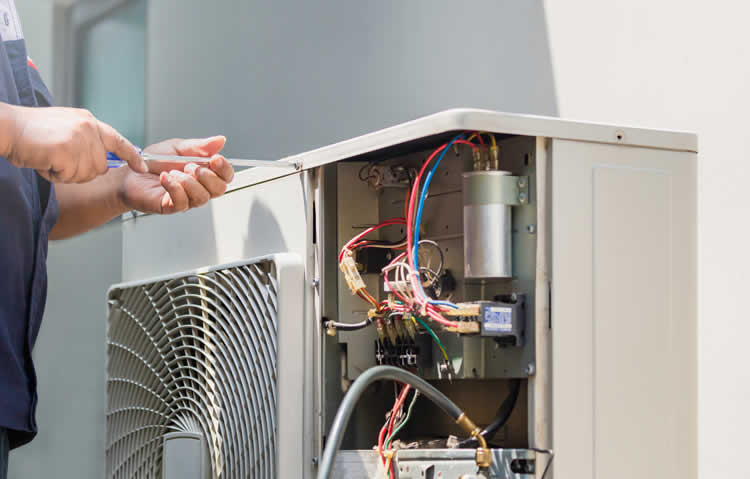
[IMAGE: Completed AC repair with technician testing system performance indoors | Alt text: HVAC professional verifying AC cooling after repair in Savannah area home]
Preventing Lengthy Repairs Through Proactive Steps
Change filters monthly during pollen season and every 1-3 months otherwise to maintain airflow and prevent coil freezing. Keep the outdoor unit clear of vegetation and debris, maintaining 2 feet around it for heat dissipation.
Schedule annual tune-ups in spring, which take 1-2 hours and include coil cleaning, electrical checks, and refrigerant verification. These catch small problems before they escalate into multi-hour jobs.
Monitor for warning signs like longer run times or warm air from vents, addressing them promptly.
[INTERNAL LINK: HVAC maintenance plans → maintenance plans page]
Final Thoughts on AC Repair Timelines
Understanding repair durations helps manage expectations during Savannah’s long, humid cooling season. Most issues resolve in a few hours with same-day comfort restored, though complex problems demand patience and sometimes follow-up. At Carriage Heating & Cooling, our licensed team uses efficient processes and Housecall Pro for clear communication from start to finish. For dependable service across Pooler, Savannah, and nearby communities, rely on experienced professionals who value your time and comfort.